Showing posts with label Puma. Show all posts

Monday, December 29, 2008

Fujitsu Siemens Amilo SA3650 Review


Notebook Check has reviewed the FSC Amilo SA3650 using the integrated video and also the XGP with a Radeon 3870.

Notebook specifications:
Processor AMD Turion X2 Ultra ZM-86 2.4 GHz
Mainboard AMD M780G
Memory 4096 MB, 2x 2048 DDR2 PC-6400 Samsung 6-6-6-18-24
Graphics adapter ATI Radeon HD3200
Display 13.3 Zoll 16:10, 1280x800 pixel, BrilliantView, Glossy
Harddisk Fujitsu MHZ2320BH G2, 320GB 5400rpm SATA-II
Soundcard Realtek ALC888

Connections:
1 Express Card 54mm, 5 USB, 1 Firewire, 2 DVI, 1 HDMI, 1 Kensington Lock, 1 eSata, Audio Connections: Headphones (SPDIF), Microphone, Line-In, Card Reader: 15-in-1 Cardreader, Webcam, XGP Port (Graphic Booster)

Networking:
Realtek RTL8168C/8111C Family PCI-E Gigabit Ethernet NIC , Atheros AR5008X Wireless Network Adapter , V2.1 Bluetooth

Optical drive Optiarc DVD RW AD-7640S
Size height x width x depth (in mm): 42 x 317 x 235
Weight 2.25 kg Power Supply: 0.45 kg
Battery Lithium-Ion, 6 cell Sanyo 2.6A
Price 1250 Euro
Operating System Microsoft Windows Vista Home Premium 32 Bit
Additional features Graphic Booster (ATI Mobility Radeon HD 3870 - 512 MB, Core: 648 MHz, Memory: 999 MHz, GDDR3), 24 Months Warranty

Verdict:
The fastest 13.3 inch notebook currently available. This is certainly the basic statement of the preceding test of the FSC Amio SA3650 notebook. The notebook itself is only to a small extent responsible for the immense power thrust. This is primarily due to the external Amilo Graphic Booster which provides the average equipped notebook with a high performance graphic card of the type ATI Mobility Radeon HD 3870.

Monday, October 6, 2008

Acer Aspire 5530G


Acer Aspire 5530G, which as part of their Aspire line up, features both looks and affordability. Inside this Acer kitty, you'll find that it's powered by AMD's 65nm Turion X2 RM70 (2.0GHz) processor, has 3GB of DDR2 RAM, and an ATI Mobility Radeon HD 3470 for its graphics chipset. As far as entertainment functions go, the 5530G has what's needed, including Dolby Surround Sound, a 15.4-inch screen for viewing your videos. Let's see what the Aspire 5530G has in store for potential buyers.

Processor and Chipset AMD Turion X2 RM-70 (2.0GHz, 1MB L2) and AMD M780G

Operating System Microsoft Windows Vista Home Premium

System Memory 3GB DDR2, 2 x DDR2 SO-DIMM slots

Video ATI Mobility Radeon HD 3470 1919MB total available graphics memory, 256MB Dedicated, 1663MB TurboCache (shared system memory)

15.4-inch WXGA widescreen display Native resolution 1280 x 800

HDD 320GB SATA (Western Digital WDC WD3200BEVT) 5400RPM 8MB cache

Audio Dolby Surround Sound 5.1 channel surround sound output HD Audio support 2 x Speakers 1 x Subwoofer


AMD has always played it closer to the lower end of the budget spectrum, offering decent performance at a competitive price, and this is continued in the Acer Aspire 5530G. Acer is moreover quite well known for its competitively priced offerings and this Puma based Acer Aspire 5530G is no different. Retailing at a very affordable S$ 1498, the unit is well worth the cash for its entertainment features, solid build and overall decent (for its specs) performance capability.


Source

Friday, September 5, 2008

AMD Puma Notebook Platform Video

Videos of AMD Puma, the Next-Generation Notebook Platform Marks New Era of Mobile Visual Performance.


Sunday, August 31, 2008

Toshiba’s new Satellite M305D-S4828


Based on AMD’s recently announced Puma platform, Toshiba’s new Satellite M305D-S4828 ($849) offers a stylish design and some cool features at a reasonable price. This notebook’s performance is nothing to write home about, but if you’re in the market for a lightweight notebook for everyday use, it will fill the bill.

Review : http://www.laptopmag.com/review/laptops/toshiba-satellite-m305d-s4828.aspx


Specifications

CPU : AMD Turion X2 Ultra ZM-80 (2.1GHz)
RAM : Included 3GB RAM Upgradable To 4GB
Hard Drive Size : 250GB
Hard Drive Speed : 5,400rpm
Hard Drive Type : SATA Hard Drive
Optical Drive Type : DVD+R DL
Optical Drive Speed : 8X
Display Size : (inches) 14.1 Native Resolution 1280x800
Graphics Card : ATI Radeon HD 3100
Video Memory : 256MB
Wi-Fi : 802.11b/g
Bluetooth : Bluetooth 2.0+EDR Mobile Broadband
Operating System : MS Windows Vista Home Premium
Ports (excluding USB) : Ethernet;Firewire;Headphone;Microphone;Modem;S/PDIF;VGA;eSATA
USB Ports : 2
Card Slot(s) : 5-1 card reader;ExpressCard
Size : 13.1 x 9.5 x 1.5 inches
Weight : 5.3 pounds

Test Results

PCMark Vantage : 2,377
3DMark03 : 3,001
3DMark06 : 1,389
Laptop Battery Test : 2:55
Wireless Performance 15 feet : 18.4 Mbps
Wireless Performance 50 feet : 11.5 Mbps

Thursday, June 5, 2008

Computex Taiwan: ATI XGP Announced

ATI made another big announcement at Computex, a new external video card platform for notebook computers called the ATI XGP (External Graphics Platform). The ATI XGP is an external PCI Express 2.0 graphics device.


ATI says that the device is externally powered and externally cooled so it won’t place demands on the notebook. Bandwidth in both directions is reported to be 4 Gbytes/s; ATI says that other external graphics solutions were limited in bandwidth.

The XGP platform is optimized to work with the new AMD Puma notebook platforms. Initially according to ATI, the XGP will use Radeon HD 3800 series graphics cards and the first units will utilize the Radeon HD 3870.

When using the XGP with a notebook featuring integrated ATI graphics, CrossFireX is available to enhance performance further. The ATI XGP also provides additional USB 2.0 connectivity for attaching other USB devices like Blu-ray players and more.

This technology allows users to choose notebooks with slim, lightweight and elegant designs, yet enjoy the full performance of a traditional desktop gaming rig wherever it’s convenient.

A specially designed PCIe 2.0 self-attaching cable connects the XGP to the notebook. The cable is designed by Japan Aviation Electronics Industry, Limited. The graphics muscle from the HD 3870 should allow users to buy a lower performance notebook including ultra portable units and then attach the ATI XGP for gaming. The XGP also allows the attachment of multiple displays as well.

Wednesday, June 4, 2008

Computex Taiwan: Puma prepares to pounce

AMD has its sights set on a big cat, Puma, the firm's new platform for mainstream laptop PCs, which it officially announced today. Puma will do battle against Intel's upcoming Centrino 2 platform later this year. For the most part, Puma represents the "mobilization" of AMD's current desktop PC technologies, with a necessarily increased focus on dynamic power and performance scaling.


The various components of the Puma platform will be largely familiar to those who know AMD's desktop products, but the big exception here is the new mobile processor design, code-named "Griffin." Griffin is a mix of old and new, combining a pair of K8-style execution cores with Phenom-style glue logic and power-saving measures. The chipset itself is manufactured on AMD's 65nm SOI process, and each core packs 1MB of L2 cache, for a total of 2MB L2 per chip. AMD says this new mobile processor has three independent power planes, one for each CPU core and a third for its integrated north bridge (with a HyperTransport link and memory controller). Griffin can scale voltage up and down as needed, in response to demand, for each of these three power planes. The north bridge supports HyperTransport 3.0, for added bandwidth, and it can drop from 16 lanes to eight, or even disconnect itself temporarily, in order to conserve power.


The first three Turion X2 Ultra models based on Griffin will be the ZM-86 (running at 2.4GHz with 2MB total L2 cache), the ZM-82 (at 2.2GHz with 1MB total L2), and the ZM-80 (at 2.1GHz with 1MB total L2).

At the other end of the HyperTransport link will sit AMD's new RS780M chipset, the mobile variant of the quite solid 780G chipset, including the SB700 south bridge. This chipset has all of the latest capabilities, including PCIe 2.0, but its biggest claim to fame is its relatively decent Radeon HD 3200 integrated graphics processor. AMD expects Puma's IGP to outperform anything Intel has to offer for Centrino 2 easily, a credible claim given the desktop variant's relatively strong performance. This IGP includes the UVD logic built into all recent Radeons, so it's capable of providing extensive decode offloading for the major high-definition video formats.

The chipset's IGP will be getting assistance from other Radeons in various ways. Hybrid graphics capability, marketed under the name PowerXpress, will allow a Puma-based system to switch between an IGP and a discrete GPU in order to optimize performance or battery life. For instance, the firm claims a laptop with a discrete Radeon HD 3650 can deliver over 2.4 times the throughput of the IGP, while popping into IGP mode and disabling the discrete GPU can prolong battery life by over 90 minutes. Users can switch between the two modes with a keystroke—no need for a reboot—or a system can be configured to switch automatically from discrete to integrated graphics when it's unplugged from a power outlet (and vice-versa).

The dynamic range possible with PowerXpress is expanded substantially by the mobile version of the Radeon HD 3800 series GPUs.

As ever, AMD hasn't attempted to create its own wireless networking solutions for Puma, instead preferring to rely on partners like Atheros, Broadcom, Marvell, and Ralink for 802.11a/b/g/n and 3G connectivity.

Read this:
AMD Introduces “Puma” Consumer-Oriented Mobile Platform
Early Hands on with new AMD Puma and Toshiba A300

Also see this:
Event photos on AMD Puma Launching

Tuesday, June 3, 2008

Computex Taiwan: Opening Day

An early look around Computex 2008, as everyone sets up their stands, reveals Taipei’s finest booth babes practicing for opening day.


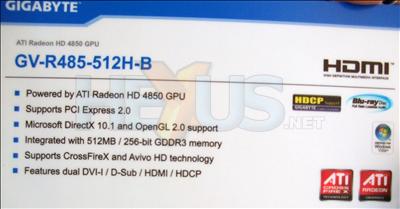
Gigabyte lets slip AMD's next-gen graphics cards, The Radeon HD 4000 series. It said to provide 512MB of GDDR3 memory, not the GDDR5 that AMD had promised. Though, this 4850 could be only mid-range derivatives.


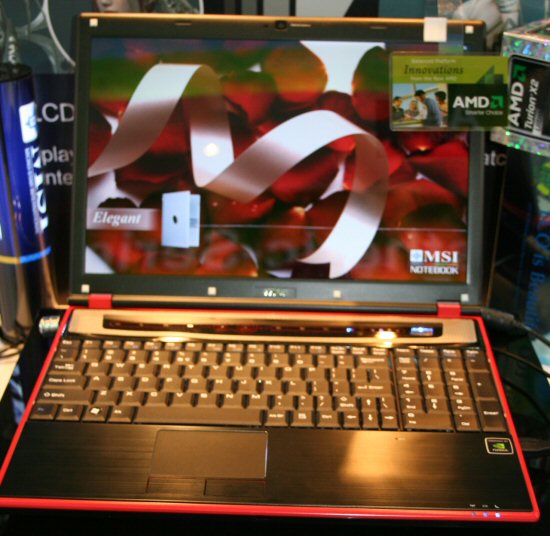
MSI have a couple of interesting offerings, namely its GX630, based on AMD’s Puma platform. The GX630 uses an AMD Turion X2 Ultra Dual-Core mobile processor which, should help the GX630 to power you through your games. A 512MB nVidia Geforce 9600M GT graphics card will provide the graphical and there’s support for up to 4GB of DDR2-667/800. On top of that there’s 7.1 audio, HDMI output, E-SATA and MSI’s Turbo feature that automatically overclocks the GX630 for when you want more extreme gaming performance.

Wednesday, May 7, 2008

AMD Puma is nearly ready

Underdog chipmaker AMD says it is seeing unprecedented uptake by PC makers for its forthcoming “Puma” notebook platform. Upwards of 100 notebooks are being designed with Puma chipsets, said John Taylor, of AMD's Graphics Division, speaking at a technology update event in Singapore.

According to Taylor, notebook manufacturers are recognizing Puma’s key advantages over competing notebook platforms (read: Intel Centrino), particularly in the area of graphics.

AMD has devised a system called “hybrid graphics” where an integrated GPU does the low-powered 2D and 3D work (for example, Vista’s GPU-accelerated windowing system) while a discrete GPU chip can be fired up instantly to take on the heavy lifting 3D tasks when a demanding application like a game or Google Earth is loaded.

For example, a Puma-based notebook might come with AMD’s RS780M integrated GPU for basic graphics work (which in itself provides up to four times the performance of current generation Radeon X1200), as well as an ATI Mobility Radeon HD 3000 with full DirectX 10.1 support. In notebooks, this hybrid graphics capability will be called AMD PowerXPress.


PowerXPress means you'll be able to have a low-power consumption integrated GPU doing your light graphics work, but a full-blooded discrete GPU can kick in with full force if you start doing anything that needs 3D graphics heavy lifting. The rest of the time it sits quietly, consuming next to no power.

On the CPU front, Puma-based notebooks will be based on the AMD Turion X2 Ultra mobile processor which uses Hypertransport 3 bus for extremely fast (20.8GB/s) data transfer between CPU and chipset, power management that can turn whole segments of the chip off on a millisecond-by-millisecond basis to save power.

Finally, AMD says its “WiFi certified” program means notebook makers will have a lot more flexibility in building notebooks with parts that are certified as compatible with the WiFi standard by the vendor-neutral WiFi forum, rather than Intel’s competing Centrino certification. Puma notebooks will offer 802.11a/b/g/n networking from vendors such as Broadcom, Atheros, Marvel and Ralink.

We can expect to see the first Puma-based notebooks launched at Computex Taiwan in June.

Popular Posts